
A greenhouse is only as productive as the environment inside it. Temperature, light, CO2, irrigation, and nutrient delivery all receive careful attention from serious growers, but humidity management often lags behind despite having a direct effect on plant health, disease pressure, growth rate, and yield. A greenhouse humidifier that maintains precise, consistent relative humidity without creating the surface moisture that promotes fungal disease is one of the most effective investments a greenhouse operation can make.
This article covers why greenhouse humidity management is challenging, what the consequences of poor control are, and what a purpose-built greenhouse humidification system must deliver to support year-round production.
Key Takeaways
- Greenhouse humidity drop causes stunted growth, slowed photosynthesis, and reduced nutrient uptake across all plant varieties.
- Non-wetting fog humidification prevents the condensation on leaf surfaces that triggers botrytis, downy mildew, and other fungal pathogens.
- Low-pressure dry fog systems operate quietly and without disruption to the greenhouse environment, unlike high-pressure delivery systems.
- Automated humidity control with smartphone monitoring allows growers to manage conditions remotely without constant on-site presence.
Why Humidity Management Is Challenging In Greenhouses
Greenhouses present specific humidity management challenges that differ significantly from enclosed industrial facilities. The large glazed surfaces create significant temperature differentials between inside and outside environments. Solar gain during the day raises temperatures and reduces relative humidity. Night cooling can cause rapid humidity increases and condensation.
Ventilation systems that manage temperature and CO2 also continuously exchange humid inside air for drier outside air. Managing humidity uniformly across these dynamic conditions requires a system that responds quickly, distributes moisture evenly, and does not create the surface moisture that is unavoidable when temperature differentials cause condensation on cold surfaces.
The Consequences Of Inadequate Humidity In Greenhouses
Low Humidity Effects
When relative humidity in a greenhouse falls below 30 percent, plants respond by closing their stomata to conserve water. This protective response also shuts down CO2 absorption, slowing photosynthesis and growth. Nutrient transport through the vascular system becomes less efficient. Leaves curl and tip burn develops. In severe cases, the entire canopy shows stress symptoms that require days or weeks to recover from even after humidity is restored.
High Humidity And Fungal Disease
When relative humidity rises above 85 to 90 percent and condensation forms on leaf surfaces, the conditions for fungal pathogen development become optimal. Botrytis, downy mildew, and powdery mildew are among the most destructive greenhouse diseases, and all require freestanding water on plant surfaces to germinate and spread.
A humidification system that raises ambient humidity without creating surface moisture is the most effective preventive measure against these diseases.
How Dry Fog Greenhouse Humidification Works
Fine Droplet Technology
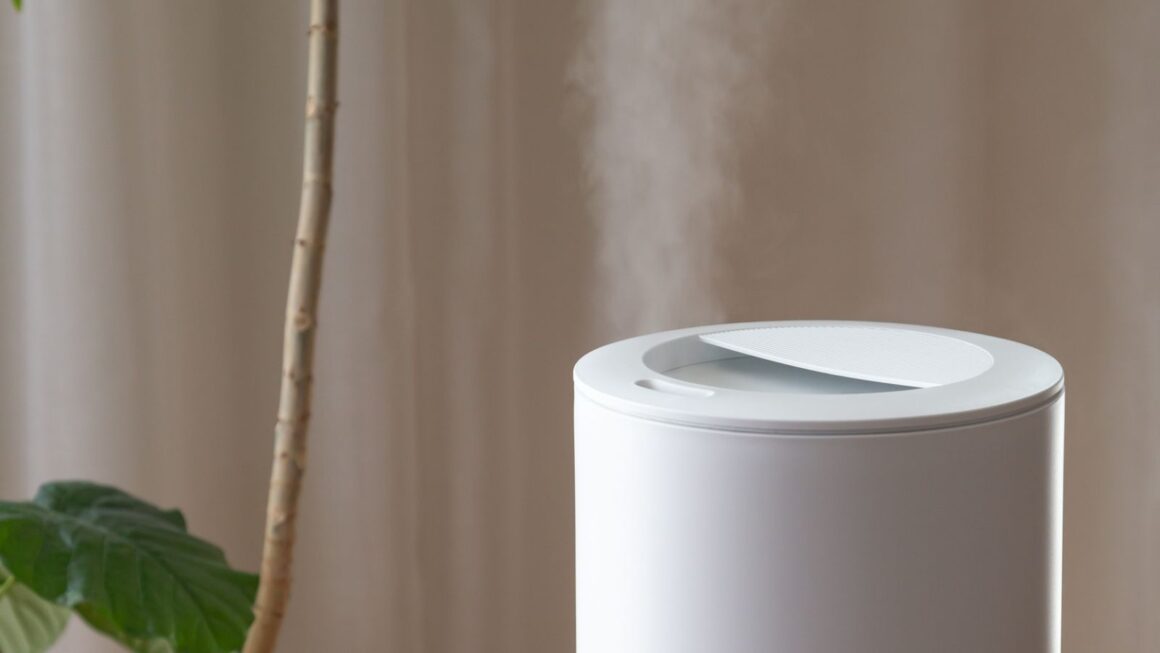
Greenhouse fog systems using 4.2-micron droplet technology produce a humidity-increasing output that remains entirely suspended in the air. The droplets are too small to fall onto leaf surfaces or pool on the growing medium. They evaporate into the ambient air, raising relative humidity throughout the greenhouse volume without wetting a single plant or surface.
Low-Pressure Delivery
Low-pressure delivery systems used in quality greenhouse humidifiers operate quietly, without the noise and vibration of high-pressure systems. This makes them unobtrusive in working greenhouses and eliminates the disruptive effect that high-pressure nozzle noise can have on sensitive plant varieties and the workers who tend them.
Automated Control With Remote Monitoring
Modern greenhouse humidification systems connect to humidity sensors throughout the growing space and adjust output automatically to maintain the target relative humidity. Systems that offer smartphone app connectivity allow growers to monitor and adjust humidity from anywhere, supporting the off-site management that is increasingly common in commercial greenhouse operations.
Humidity Requirements For Common Greenhouse Crops
| Crop Category | Optimal RH Range | Primary Humidity Risk |
| Leafy greens and herbs | 50 to 70 percent | Low RH causes tip burn and bolting |
| Tomatoes and cucumbers | 60 to 80 percent | High RH with condensation triggers botrytis |
| Orchids and tropical plants | 60 to 80 percent | Low RH causes flower drop and leaf curl |
| Cannabis | 50 to 80 percent (stage-dependent) | Wide range required across growth stages |
| Seedlings and propagation | 70 to 85 percent | Low RH prevents successful rooting |
| Cut flowers | 60 to 75 percent | Low RH shortens vase life and causes petal wilting |
Additional Benefits Of Greenhouse Humidification
Evaporative Cooling
During high-temperature periods, evaporative cooling from the humidification process reduces ambient greenhouse temperatures without requiring additional refrigeration or mechanical cooling. This is particularly valuable during summer production cycles when heat stress is a primary threat to crop quality.
Dust And Pathogen Suppression
The fine droplets produced by dry fog systems attract and adhere to airborne dust particles, mold spores, and other airborne contaminants, carrying them to the floor rather than leaving them suspended in the growing environment. This air-cleaning effect reduces both disease pressure and the particulate load that settles on leaf surfaces.
Compatibility With Double-Tier Grow Rooms
Well-designed greenhouse humidification systems are capable of serving double-tier and multi-level growing configurations, ensuring that upper and lower tiers receive equivalent humidity coverage without over-humidifying one level to compensate for inadequate coverage at another.
Summary
A greenhouse humidifier is one of the most directly productive investments a growing operation can make, with measurable effects on crop health, disease pressure, yield consistency, and growing season extension. By maintaining precise, non-wetting relative humidity throughout every growing space and every season, these systems remove humidity from the list of variables that growers need to manage manually and allow the growing environment to support plant performance at every stage of production.
Frequently Asked Questions
What is the optimal humidity for a greenhouse during winter?
During winter, when outside air is dry and cold, maintaining greenhouse humidity requires active humidification input to compensate for the drying effect of heating systems and the exchange of dry outside air through ventilation. Most crops benefit from relative humidity between 50 and 70 percent during winter growing periods, with seedlings and propagation areas targeting higher levels.
Can a greenhouse humidifier also cool the growing space?
Yes. Self-evaporative humidification systems draw heat from the surrounding air as the evaporation process occurs, providing a measurable cooling effect without mechanical refrigeration. In hot climates or during summer growing periods, this dual benefit makes a greenhouse humidifier a valuable component of the overall climate management strategy.
How do I prevent mold in a greenhouse while maintaining high humidity?
The key to preventing mold at high humidity is using a non-wetting humidification system that does not deposit moisture on plant surfaces. Dry fog systems producing 4.2-micron droplets maintain high ambient humidity while ensuring that no freestanding water forms on leaves, stems, or the growing medium. Without surface moisture, mold spores have no substrate to germinate on.
Can greenhouse humidification systems interface with existing environmental control systems?
Yes. Modern greenhouse humidification systems support communication protocols that allow integration with existing building monitoring systems and environmental controllers. This means humidity can be managed as part of a unified climate control program alongside temperature, CO2, lighting, and irrigation.
How do I size a greenhouse humidifier for my facility?
System sizing depends on the floor area, ceiling height, glazing type, ventilation rate, crop type, and target humidity level. A properly sized system should be able to replace moisture lost through ventilation and plant transpiration while maintaining the target humidity level across the full growing volume. Professional consultation with the humidifier supplier using these specifications is the most reliable way to arrive at the correct system capacity.
