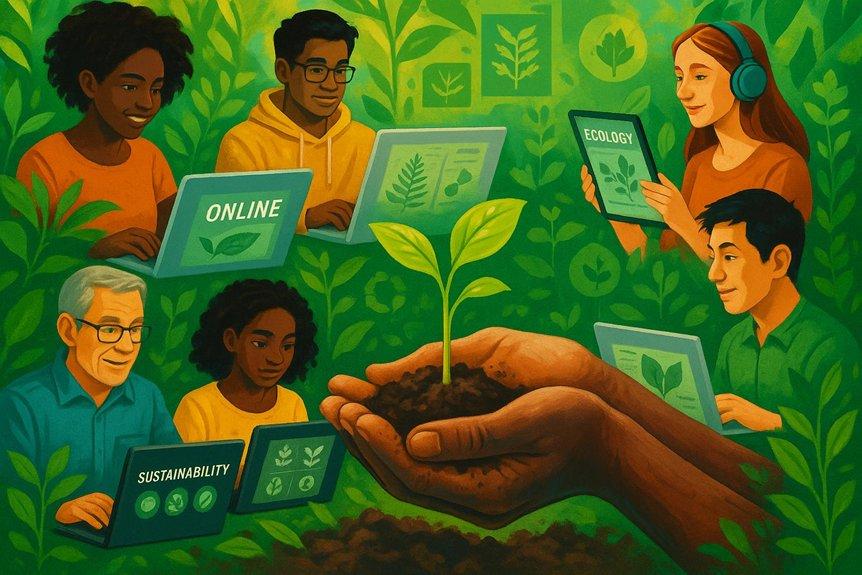
Micro-credentials in sustainability are revolutionizing education by providing targeted and flexible learning paths for plant conservation. These short online courses allow you to gain specific skills quickly, fitting your busy schedule. With an increasing focus on eco-friendly practices, these programs bridge the skills gap in the workforce and enhance your career opportunities. You’ll also find plenty of practical applications to empower local initiatives. Explore how these innovative courses can help you make a real impact in conservation.
Why Plant Conservation Matters Today
As climate change accelerates and habitats continue to shrink, understanding why plant conservation matters today is more important than ever.
You may not realize that plant extinction contributes considerably to the biodiversity crisis, threatening ecosystems and the essential services they provide. When habitats are lost, the ecological balance falters, impacting everything from air quality to food sources.
Implementing effective conservation strategies is imperative for species protection and maintaining biodiversity. By embracing sustainable practices, you can reduce your environmental impact and help preserve the plants that sustain life.
Every action counts; whether it’s supporting local conservation efforts or advocating for policies that protect natural habitats, your involvement can make a difference in the fight against climate change and habitat loss.
Understanding Micro-Credentials: A New Era in Education
Micro-credentials are reshaping how you think about education, offering a flexible way to gain skills in sustainability.
These short courses not only enhance your expertise but also make a significant impact on your career and the environment.
Understanding their benefits can open doors to new opportunities and contribute to a more sustainable future.
Defining Micro-Credentials Today
While traditional degrees have long been the cornerstone of education, micro-credentials are rapidly emerging as a flexible and targeted approach to learning.
These bite-sized qualifications focus on specific skills or knowledge areas, making them ideal for busy professionals like you. Current trends show that industries are increasingly valuing these credentials, recognizing their ability to fill skill gaps quickly.
With insights from various sectors, you can see how micro-credentials align with evolving job demands, particularly in sustainability. They provide a practical way to enhance your expertise without the time commitment of a full degree.
Benefits of Short Courses
With the rapid pace of change in today’s job market, short courses offer a dynamic way to acquire new skills and knowledge quickly.
One of the key short course benefits is their flexibility; you can learn at your own pace and fit your education around your existing commitments. This approach makes it easier for you to balance work, family, and personal interests while advancing your career.
Additionally, short courses often focus on practical, relevant skills that employers are actively seeking, giving you a competitive edge. You’ll also find that many programs are available online, making access even easier.
Whether you want to specialize in plant conservation or broaden your expertise, these courses provide a valuable opportunity for growth in a rapidly evolving field.
Impact on Sustainability Education
As the demand for sustainability expertise grows, understanding micro-credentials can transform your approach to education in this vital field.
These short, focused courses offer you a practical way to immerse yourself in sustainable practices and conservation strategies without committing to lengthy degree programs. By acquiring targeted skills, you can quickly become equipped to address pressing environmental issues.
Micro-credentials allow you to learn at your own pace, making it easier to balance your education with other commitments. Plus, they signal to employers that you’re serious about sustainability, enhancing your career prospects.
Embracing this new era in education can empower you to make a real difference in your community and beyond, all while expanding your knowledge and skill set in sustainability.
How Micro-Credentials Bridge the Skills Gap in Sustainability
In today’s rapidly evolving job market, there’s a growing demand for specialized skills in sustainability.
Micro-credentials offer accessible learning opportunities that help you gain the expertise needed to meet this demand.
Skills Demand in Sustainability
While the demand for sustainability skills is soaring across industries, many professionals struggle to bridge the existing skills gap. This gap can hinder your pursuit of sustainable careers and limit your potential in a rapidly changing job market.
Micro-credentials offer a practical solution, allowing you to gain future skills quickly and effectively. These short online courses focus on specific competencies, making it easier to develop expertise in key areas like plant conservation, renewable energy, and sustainable agriculture.
By obtaining these credentials, you enhance your employability and demonstrate your commitment to sustainability. Plus, you can tailor your learning to match your career aspirations, ensuring you’re well-prepared for the challenges ahead.
Embrace micro-credentials to bridge the gap and thrive in the sustainability sector.
Accessible Learning Opportunities
Micro-credentials create accessible learning opportunities that directly address the skills gap in sustainability.
With short online courses, you can easily fit learning into your schedule, gaining essential skills without the burden of lengthy programs. These flexible options promote digital inclusivity, benefiting everyone from busy parents whose children attend a virtual elementary school to professionals changing careers, ensuring that individuals from various backgrounds can participate and grow in the field.
Plus, by engaging with online communities, you’ll connect with like-minded learners and industry experts, enhancing your understanding and network.
Micro-credentials also empower community engagement by equipping you with the knowledge to drive local sustainability efforts.
This blend of accessibility and practical skill development makes micro-credentials an invaluable tool for anyone looking to make a meaningful impact in sustainability.
Top Advantages of Micro-Credentials for Aspiring Conservationists
For aspiring conservationists, micro-credentials offer a flexible and targeted way to enhance your skills and knowledge in a rapidly evolving field. One major advantage is the opportunity for career advancement; these short courses allow you to specialize in areas like plant conservation without committing to lengthy degree programs.
Additionally, micro-credentials often emphasize community engagement, enabling you to connect with like-minded individuals and organizations. This networking can lead to collaborations and job opportunities that align with your passion for conservation.
Moreover, as employers increasingly recognize these credentials, you’ll stand out in a competitive job market. Embracing micro-credentials empowers you to stay current, gain practical experience, and contribute meaningfully to the conservation movement.
Popular Micro-Credential Programs for Plant Conservation
When you’re looking to boost your knowledge in plant conservation, several popular online micro-credential programs can help you get started.
Key institutions offer courses that not only enhance your skills but also connect you with a community of like-minded conservationists.
Let’s explore these options and see what fits your goals best.
Online Courses Overview
Several online courses offer micro-credential programs focused on plant conservation, providing you with flexible learning options to enhance your skills in this vital field.
These programs typically feature a well-structured course layout, combining video lectures, interactive quizzes, and real-world case studies. You can expect to explore topics like biodiversity, restoration ecology, and conservation strategies, all designed to fit your busy schedule.
Many courses also emphasize practical applications, empowering you to implement your newfound knowledge in various contexts. By leveraging online learning, you can connect with experts and peers globally, enriching your educational experience.
Whether you’re a novice or a seasoned professional, these micro-credentials can be a valuable step in advancing your career in plant conservation.
Key Institutions Offering Programs
Many reputable institutions offer popular micro-credential programs in plant conservation, each designed to equip you with essential skills and knowledge.
For instance, universities like the University of California and Arizona State University partner with conservation organizations to create effective curricula. These institution partnerships enhance program effectiveness by providing real-world insights and networking opportunities.
You’ll find courses focusing on plant taxonomy, habitat restoration, and biodiversity conservation. By enrolling in these programs, you gain access to expert-led content and hands-on projects that can greatly boost your career.
As the demand for skilled professionals in sustainability grows, these micro-credentials not only make you more competitive in the job market but also empower you to make a meaningful impact in plant conservation.
Success Stories: Real-World Applications of Micro-Credentials
As organizations increasingly prioritize sustainability, micro-credentials have emerged as a powerful tool to equip individuals with the specific skills needed to drive change.
You can find several success stories highlighting real-world applications of these courses. For instance, a participant in a plant conservation micro-credential program implemented a biodiversity initiative in their local community, greatly increasing native plant populations.
Another example involves a corporate sustainability officer who utilized their micro-credential training to develop an eco-friendly policy framework that reduced waste by 30%.
These stories illustrate how micro-credentials empower individuals to take meaningful action in sustainability, leading to tangible results.
How Educational Institutions Collaborate With Conservation Organizations on Micro-Credentials
While traditional educational pathways often focus on broad knowledge, collaborating with conservation organizations allows educational institutions to create targeted micro-credentials that address specific environmental challenges.
These collaborative partnerships foster educational innovation by merging academic expertise with practical conservation needs. For instance, institutions can develop courses on biodiversity conservation, tailored to the pressing issues faced by organizations in the field.
This synergy not only enhances the curriculum but also guarantees that learners acquire skills directly applicable to real-world scenarios. By engaging directly with conservationists, students gain insights and experiences that enrich their understanding of sustainability.
Ultimately, these micro-credentials empower learners, equipping them with the tools necessary to make a tangible difference in plant conservation and other environmental initiatives.
Breaking Down Barriers: Making Conservation Education Accessible
How can we guarantee that everyone has access to conservation education? By focusing on barrier reduction and promoting educational equity, we can create pathways for diverse learners.
Online micro-credentials offer flexible learning options, breaking down geographical and financial obstacles. You don’t need a degree to engage with conservation topics; these short courses empower you to gain valuable skills at your own pace.
Additionally, partnering with local organizations can help tailor programs to specific community needs, ensuring that content is relevant and accessible. By prioritizing inclusivity, we not only expand the reach of conservation education but also enrich the field with varied perspectives.
Together, let’s dismantle barriers and cultivate a more informed, passionate community dedicated to plant conservation.
The Future of Micro-Credentials in Sustainability
Micro-credentials in sustainability are set to transform education and professional development, offering you a dynamic way to enhance your skills in response to evolving environmental challenges.
As future trends point to an increasing emphasis on sustainability across industries, these short online courses will become essential. You’ll find educational innovations that provide flexible learning options, allowing you to gain expertise in specific areas like conservation techniques or sustainable practices.
This shift not only makes learning more accessible but also guarantees you’re equipped with relevant knowledge to tackle pressing environmental issues. As the demand for skilled professionals grows, micro-credentials will position you at the forefront of sustainability efforts, enabling you to make a meaningful impact in your community and beyond.
Choosing the Right Micro-Credential Program for Your Conservation Goals
As the demand for sustainability skills rises, selecting the right micro-credential program can greatly influence your conservation efforts. Here’s how to make an informed program selection that aligns with your career goals:
- Identify Your Passion: Focus on courses that resonate with your interests, whether it’s plant conservation, ecosystem restoration, or sustainable practices.
- Evaluate Program Credibility: Look for programs offered by reputable institutions or organizations that are recognized in the field of sustainability.
- Consider Flexibility: Make certain the program fits your schedule and allows you to balance learning with your current commitments.
Conclusion
In a world where plant conservation is the superhero we desperately need, micro-credentials are your cape! These bite-sized courses aren’t just convenient; they’re the ultimate secret weapon in the fight against biodiversity loss. By equipping you with essential skills and knowledge, you’re not just learning—you’re joining a global movement. So, don’t just sit on the sidelines; immerse yourself in a micro-credential program today and become the conservation champion we all know you can be!
