
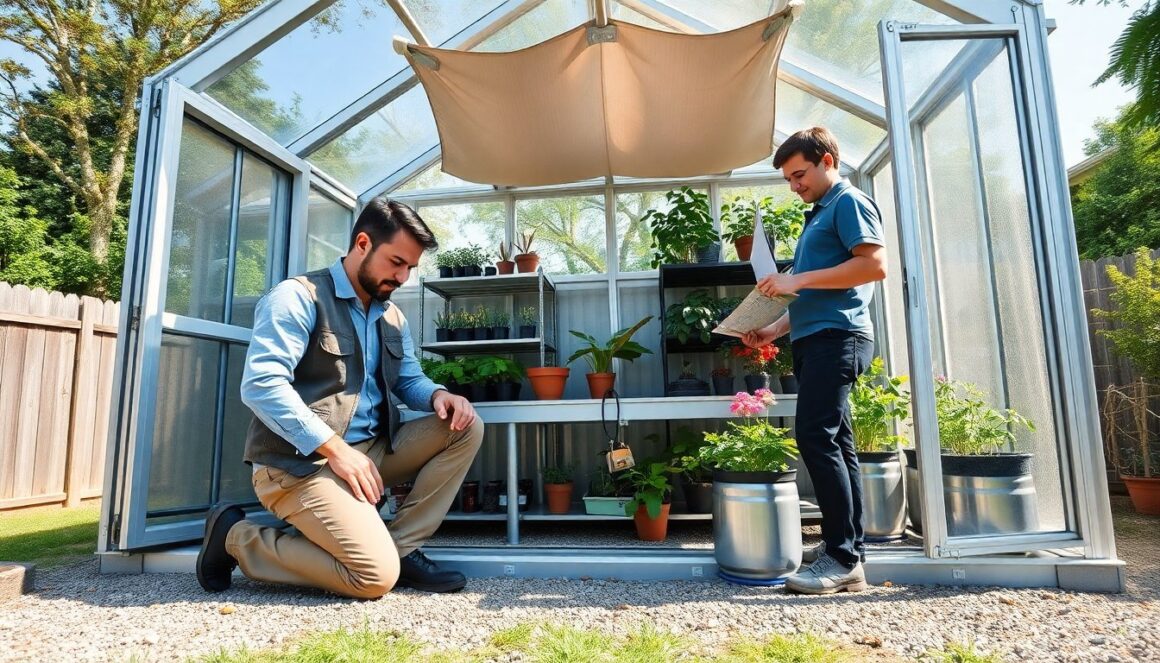
Savingtheplants glass greenhouses offer clear-glass, year-round growing options for home gardeners. This guide explains model choices, siting, and care. It shows simple steps that help plants thrive. Readers will learn what to check before buying, how to install, and how to maintain a glass greenhouse for many seasons.
Key Takeaways
- Savingtheplants glass greenhouses provide superior light transmission and durability, enhancing plant growth and extending the growing season for home gardeners.
- Choosing the right greenhouse model involves considering size, roof pitch, eave height, and accessories to match local climate and gardening goals.
- Proper site selection with at least six hours of direct sun, good drainage, and appropriate orientation optimizes light exposure and plant health.
- Frames made of aluminum or steel should be selected based on local weather conditions to ensure structural strength and corrosion resistance.
- Installation requires careful planning about foundation type and compliance with local permits and building codes to avoid legal issues.
- Routine seasonal maintenance, including cleaning, sealing, and climate control adjustments, is essential to maintain the greenhouse’s efficiency and longevity.
Why Choose Glass Greenhouses: Benefits For Home Gardeners
Glass greenhouses deliver high light transmission. They let more sun reach plants than polycarbonate or plastic. This higher light helps fruiting, flowering, and compact growth. Glass also resists yellowing and scratches. It stays clear longer than many plastics. Savingtheplants glass greenhouses use tempered or safety glass. They improve plant health by reducing light scatter and keeping stable daytime light.
Home gardeners gain a predictable environment. Glass walls and roofs provide passive solar gain. They hold heat on sunny days and release heat at night. This effect extends the growing season. Gardeners can grow tender seedlings earlier and finish crops later in the fall. Glass also supports a cleaner interior. It sheds dust and debris when gardeners rinse it. That ease of cleaning limits pests and fungal spores. For gardeners who value light quality and durability, glass greenhouses offer clear advantages.
How To Choose The Right SavingThePlants Glass Greenhouse Model
Buyers should match model size and features to their site and goals. Savingtheplants glass greenhouses come in hobby, family, and small commercial sizes. Each model lists dimensions, door placement, and vent type. Buyers should compare model specs and local climate. They should select a model that fits the intended crop mix and maintenance plan.
Savingtheplants offers models with different roof pitches and eave heights. Higher eaves suit trellised crops and tall ornamentals. Lower eaves make heat control easier for tabletop seed starts. Gardeners should check accessory options. Options include automated vents, shelving kits, and shade cloth. They should choose items that match daily routines and budget.
Size, Orientation, And Site Considerations
Choose site space that receives at least six hours of direct sun. Glass greenhouses perform best on sites with uninterrupted sun from morning to afternoon. They should sit away from tall trees that cast long shade. Gardeners should place greenhouses on a slight grade or add drainage to avoid standing water.
Orientation affects winter light. A south-facing ridge gives the most winter sun in northern latitudes. East-west orientation gives more uniform light through the day in lower latitudes. Gardeners should allow room for doors, roof vent access, and maintenance around the structure. They should measure carefully and mark the footprint before buying a foundation or base.
Glazing, Frame Materials, And Energy Efficiency
Savingtheplants uses clear tempered glass in most models. Tempered glass meets safety codes and resists breakage. Gardeners should confirm U-factor and solar heat gain numbers when they compare models. These numbers help estimate winter heat loss and summer heat gain.
Frames come in aluminum and powder-coated steel. Aluminum frames resist corrosion and require less paint. Steel frames provide higher load ratings in heavy snow zones. Gardeners should match frame strength to local wind and snow loads. For energy efficiency, adding insulated bases, thermal curtains, or double-glazed sections reduces heat loss at night. Gardeners should weigh upfront costs against yearly heating savings.
Installation, Foundation Options, And Local Permits
Savingtheplants greenhouses ship with assembly guides and hardware kits. Many gardeners assemble smaller models over a weekend. Larger models may need professional crews for safe and correct assembly. Foundations range from simple concrete pads to timber frames or compacted gravel with edge restraints. Concrete slabs offer the most permanent base and anchor options. Gravel pads give drainage and lower cost. Timber frames reduce concrete use and allow future relocation.
Gardeners should check local building codes before installation. Many jurisdictions require permits for permanent structures or structures with electrical and plumbing. Permits often require engineered drawings for larger models. Gardeners should contact local planning offices early. They should verify setback rules, height limits, and whether frost footings are required. Doing this avoids delays and potential fines.
Seasonal Care, Climate Control, And Long‑Term Maintenance
Gardeners should plan for seasonal heating, cooling, and cleaning. In winter, adding a small heater and insulation helps prevent frost damage. In summer, shade cloth and exhaust fans reduce peak temperatures. Automated vent openers and thermostats give reliable control and free gardeners from constant monitoring.
Routine maintenance keeps glass and frames sound. Gardeners should wash glass twice per year with mild soap and water. They should inspect seals, fasteners, and frame joints every season. Replace cracked panes and seal gaps to keep pests out and reduce heat loss. Gardeners should clear gutters and check roof flashing after storms. Regular maintenance extends the life of a Savingtheplants glass greenhouse and protects plant investments.