Agriculture has always adapted to the demands of the time. From the introduction of irrigation systems to the rise of precision farming, each era has brought new tools that allow growers to produce more efficiently and reliably. Today, controlled environment agriculture and the high-tech greenhouse sector represent one of the most significant shifts in how commercial food production is being approached worldwide.
The growing demand for year-round produce
Global food supply chains are under increasing pressure. Population growth, urbanization, and rising consumer expectations around freshness and consistency are pushing the agricultural sector to find solutions that go beyond traditional seasonal field production.
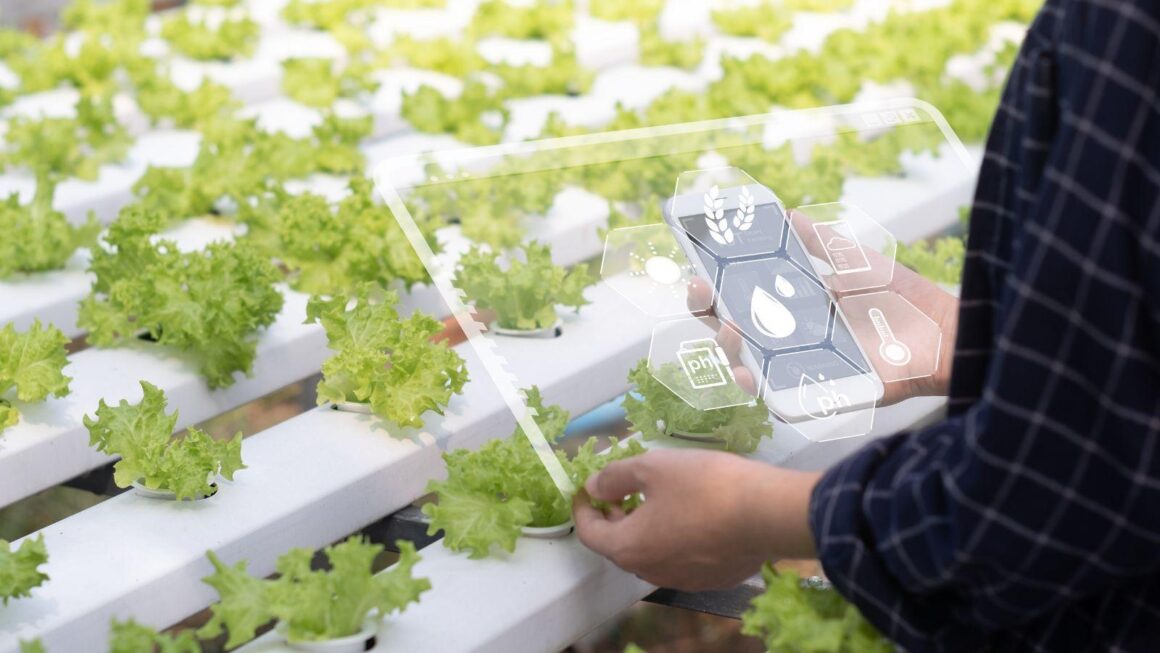
Greenhouses answer many of these demands directly. By enclosing the growing environment, growers gain control over temperature, humidity, light, CO2 levels, and irrigation, allowing them to produce crops throughout the year regardless of outdoor conditions. For fresh vegetables, herbs, and fruits destined for retail or foodservice, this consistency is not just convenient but increasingly expected by buyers.
This shift is particularly visible in markets like the United States, where investment in large-scale commercial greenhouse facilities has accelerated significantly over the past decade.
What sets modern greenhouse construction apart
Not all greenhouse facilities are created equal. The gap between a basic polytunnel and a modern high-tech greenhouse is enormous, both in terms of the technology involved and the yields it can support.
Today’s commercial greenhouse projects are highly engineered operations. Working with a specialist greenhouse construction company means integrating structural design, climate control systems, heating and cooling infrastructure, lighting, water and nutrient management, and automation into a single coherent facility. Each element needs to be designed and calibrated to work in harmony with the others.
Dutch horticultural engineering has long set the benchmark for this kind of integrated approach. With limited land available and a strong export-driven agricultural sector, the Netherlands developed some of the world’s most resource-efficient greenhouse systems. Growers there regularly achieve yields per square meter that would be impossible to replicate in open-field conditions, and that expertise is now being applied to commercial projects in North America, the Middle East, and beyond.
Iowa as a case study in Midwest greenhouse investment
The American Midwest may not be the first region that comes to mind when thinking about greenhouse growing, but states like Iowa are quietly becoming important hubs for controlled environment agriculture investment.
Iowa’s agricultural economy is substantial, dominated by corn and soy production, but a growing number of operators are looking at greenhouses as a way to diversify into higher-value fresh produce crops. The logic is straightforward: local retail and foodservice markets demand fresh vegetables year-round, but the state’s cold winters and warm summers make consistent open-field production challenging for sensitive crops.
Partnering with an experienced greenhouse builder Iowa growers can rely on brings both technical expertise and an understanding of the regional climate requirements that shape greenhouse design in the Midwest. Heating demands, insulation standards, and ventilation strategies all need to be adapted to local conditions to ensure that a facility performs efficiently across all four seasons.
Sustainability and resource efficiency
One of the strongest arguments for greenhouse agriculture from an agribusiness perspective is resource efficiency. High-tech greenhouse systems typically use significantly less water per kilogram of produce than equivalent open-field operations, thanks to closed-loop irrigation that recirculates and reuses water throughout the system.
Energy consumption, often cited as a concern for greenhouse operations, is also being addressed by advances in heating technology, including heat pumps, geothermal energy connections, and LED grow lighting that reduces electricity demand while providing crops with optimized light spectra. For agribusinesses and investors evaluating greenhouse projects, these efficiencies translate directly into lower operating costs and a more defensible sustainability story for retailers and end consumers.
The investment case for controlled environment agriculture
From an agribusiness perspective, greenhouses represent a capital-intensive but increasingly attractive investment category. The combination of year-round production capability, predictable yields, reduced weather risk, and proximity to urban consumer markets creates a business case that is drawing attention from both traditional agricultural operators and new entrants to the sector.
As food supply chains continue to adapt to the realities of climate variability and shifting consumer expectations, the role of controlled environment agriculture in meeting global food demand is only likely to grow. For agribusinesses looking to position themselves for that future, understanding the technology and the infrastructure behind modern greenhouse production is an increasingly important part of the conversation.